
GAA Two-Pointers 2026: How New Rules Change Football

Sixty-one motions. Forty-five minutes. That’s how fast the GAA’s Special Congress in October 2025 made the biggest rule overhaul in Gaelic football history permanent. The trial period was over. The new rules – led by the two-point arc – are now baked into the sport’s DNA, effective January 1, 2026.
The 2026 Allianz Football League is the first full competition under the permanent rules. Three rounds in, the predictions are proving right: two-pointers are changing how teams attack, defend, and think about the game.
Clare are one of the teams benefiting most.
How the Two-Point Arc Works
Simple version: kick the ball over the bar from outside the 40-metre arc, and it’s worth two points instead of one. Umpires wave an orange flag – the third colour of the Irish tricolour – to signal it. Goals still count for three.
The key tweak for 2026: if an opposition player touches the ball before it crosses the bar, the two-pointer still stands. Last year, a deflection reduced it to one point – a rule that caused huge controversy in the 2025 Connacht final when Galway’s Conor Gleeson appeared to tip a Ryan Donoghue free. That ambiguity is gone now.
Frees from 45s don’t count as two-pointers. Neither do sideline kicks. It has to be from general play, a regular free, or the new “solo and go” option.
📊 Key Stat: 61 rule changes were approved at the 2025 Special Congress in under 45 minutes – the fastest major rules vote in GAA history. (Source: GAA.ie, Balls.ie)
What It Means on the Pitch
The maths is devastating. Think about it in basketball terms, as one analysis from Mayo pointed out. If a team scores 4 out of 10 two-point attempts, that’s 8 points. To get the same return from one-pointers, you’d need to score 8 out of 10. Teams with good long-range shooters now have a huge built-in advantage.
Clare’s footballers scored three two-pointers in the first half alone against Down in Round 1. Aaron Griffin hit one from outside the 45. Brian McNamara landed another. Goalkeeper Stephen Ryan scored a two-pointer from a free. Three kicks, six points – the same return as two goals without ever threatening the net.
That changes defensive calculations completely. Teams can’t just drop everyone behind the ball and compress space near the 45. If you leave shooters free at range, you pay double.
The FRC’s Jim Gavin designed the rules with one goal: make football more exciting to watch. Three rounds into the 2026 league, the average combined score per game is up. The blanket defence is dying. Long-range shooting is a weapon again.
Which Teams Are Adapting Fastest?
Kerry were early adopters. Their men’s team won the All-Ireland and league double in 2025 using the trial rules, and they have the shooters – David Clifford, Seán O’Shea, Paudie Clifford – to exploit the arc better than anyone.
Dublin’s decline coincided with the new rules. Their game was built on possession and hand-passing through the middle. Two-pointers reward direct kicking from distance – not Dublin’s style.
Clare sit in an interesting spot. Division 3 isn’t where the rules get the most scrutiny, but the Banner’s scoring stats suggest they’re adapting well. Their 2-17 per game average is the best in the division, and a good chunk of those scores are coming from range. If they can carry that into the championship, the two-point arc could be Clare football’s biggest ally in years.
The Rules Beyond Two-Pointers
The arc gets the headlines, but the other 60 rule changes matter too. The “solo and go” – tapping the ball and playing on immediately from a free – speeds up dead-ball situations. The 4v3 rule – four players in your own half, three in the opposition’s – stops blanket defences. The enhanced black card – cynical jersey-pulling in the scoring zone now gets a black card AND a penalty – punishes professional fouls harder.
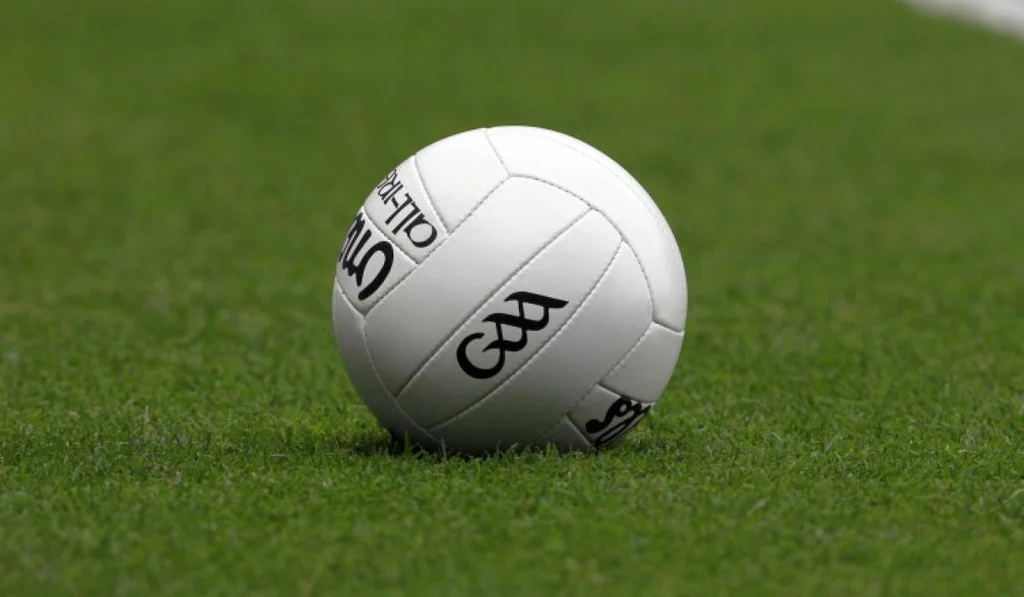
Together, these rules are pushing football toward a faster, more attacking game. The 2026 league is the proving ground.
What It Means for Clare’s Season
Clare’s footballers have the shooters. Griffin, McNamara, and Ryan are all comfortable from range. The two-point arc rewards exactly what they do well. If Clare get promoted to Division 2, they’ll face teams who are further along in adapting to the new rules – but they’ll bring a weapon most Division 3 teams haven’t figured out yet.
The next test is Saturday in Rathkeale against Limerick. Watch how many two-pointers Clare attempt. It’ll tell you everything about how seriously they’re taking the tactical shift.
